
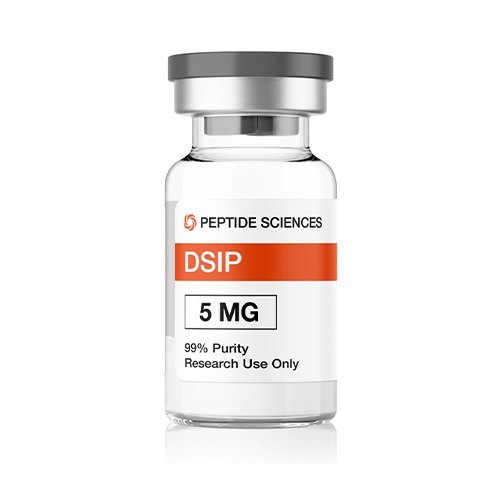
DSIP (Delta Sleep-Inducing Peptide): About, Benefits, and Scientific Overview
About DSIP
DSIP, short for Delta Sleep-Inducing Peptide, is a naturally occurring neuropeptide that has attracted scientific interest due to its potential role in sleep regulation and stress response. First discovered in the 1970s, DSIP is found in the brain and is believed to interact with the central nervous system, particularly during deep sleep cycles.
Unlike conventional sleep aids, DSIP is not classified as a sedative or hypnotic drug. Instead, it is studied for its regulatory and modulatory effects on the body’s natural sleep mechanisms. Because of this, DSIP has become a topic of discussion in neuroscience, peptide research, and sleep science.
This article provides a comprehensive, educational overview of DSIP, including its structure, biological role, potential benefits, and current research status.
What Is Delta Sleep-Inducing Peptide?
Delta Sleep-Inducing Peptide is a short chain peptide composed of nine amino acids. It was initially identified during experiments involving sleep modulation in mammals. Researchers observed that DSIP appeared to promote delta wave activity in the brain, which is associated with deep, restorative sleep stages (also known as slow-wave sleep).
DSIP is endogenous, meaning it is naturally produced by the body. It has been detected in various regions of the brain, as well as in peripheral tissues, suggesting that its role may extend beyond sleep alone.
How DSIP Works in the Body
Although the exact mechanism of action of DSIP is still under investigation, studies suggest that it interacts with:
-
Neurotransmitter systems
-
Hormonal regulation pathways
-
Stress-related signaling processes
DSIP is thought to influence the hypothalamus and pituitary gland, areas responsible for maintaining circadian rhythm, hormone release, and stress adaptation. Rather than forcing sleep, DSIP appears to help the body normalize sleep patterns by supporting internal biological balance.
DSIP and Sleep Regulation
One of the most researched aspects of DSIP is its connection to deep sleep (delta sleep). Delta sleep is critical for:
-
Physical recovery
-
Immune system function
-
Memory consolidation
-
Hormonal balance
Some experimental studies indicate that DSIP may help increase the duration or quality of slow-wave sleep under certain conditions, particularly when sleep patterns are disrupted by stress or environmental factors.
It is important to note that research findings are mixed, and DSIP does not appear to have identical effects in all individuals. This variability is one reason why DSIP remains an active area of scientific research.
Potential Benefits Studied in Research
While DSIP is not approved as a medical treatment, researchers have explored its possible effects in several areas:
1. Stress Response Modulation
DSIP has been studied for its potential to reduce physiological responses to stress. Some findings suggest it may help regulate cortisol and other stress-related hormones.
2. Adaptation to Fatigue
Early research explored DSIP’s role in helping the body adapt to physical and mental fatigue, particularly in high-stress environments.
3. Neuroprotective Properties
There is limited evidence suggesting DSIP may support neuronal stability under certain experimental conditions, though this area requires further study.
4. Hormonal Interaction
DSIP may influence the release of growth hormone and other regulatory hormones associated with sleep and recovery.
These findings are primarily based on laboratory and experimental studies, not large-scale clinical trials.
DSIP in Scientific and Medical Research
DSIP remains a research-grade peptide, primarily used in academic and laboratory settings. Scientists continue to study its biochemical behavior, receptor interactions, and long-term effects.
One of the challenges in DSIP research is its complex and context-dependent behavior. In some studies, it shows noticeable effects, while in others, the impact is minimal. This suggests that DSIP’s activity may depend heavily on dosage, timing, biological environment, and individual physiology.
As of now, DSIP is not widely recognized in mainstream clinical practice, but it continues to be referenced in neuroscience literature.
Safety and Research Considerations
Because DSIP is still under investigation:
-
It is not approved as a prescription medication
-
Long-term safety data in humans is limited
-
Effects may vary significantly between individuals
Most authoritative sources emphasize that DSIP should only be discussed or handled within ethical research frameworks. Anyone interested in sleep health should consult qualified healthcare professionals and rely on evidence-based approaches.
DSIP vs Traditional Sleep Aids
Unlike traditional sleep medications that often act by depressing the central nervous system, DSIP is studied for its regulatory role rather than direct sedation.
| Feature | DSIP | Traditional Sleep Aids |
|---|---|---|
| Mechanism | Sleep modulation | CNS suppression |
| Dependency Risk | Unknown | Often documented |
| Research Status | Experimental | Clinically approved |
| Usage | Research only | Medical treatment |
This distinction is one reason DSIP continues to attract interest in scientific circles.
Current Limitations and Future Research
Despite decades of study, DSIP is still not fully understood. Key areas that require further research include:
-
Clear identification of DSIP receptors
-
Large-scale human clinical trials
-
Long-term physiological impact
-
Interaction with other neuropeptides
Future advances in neuroscience and peptide research may provide clearer answers about DSIP’s practical significance.
Conclusion
Delta Sleep-Inducing Peptide (DSIP) is a fascinating neuropeptide with potential implications for sleep regulation, stress response, and neurological balance. While early research highlights promising properties, DSIP remains an experimental compound, primarily explored in scientific and academic contexts.
For now, DSIP should be viewed as an important subject of research rather than a proven solution for sleep disorders. Ongoing studies may eventually clarify its role and unlock new insights into how the brain regulates sleep and recovery.


Reviews
There are no reviews yet.