
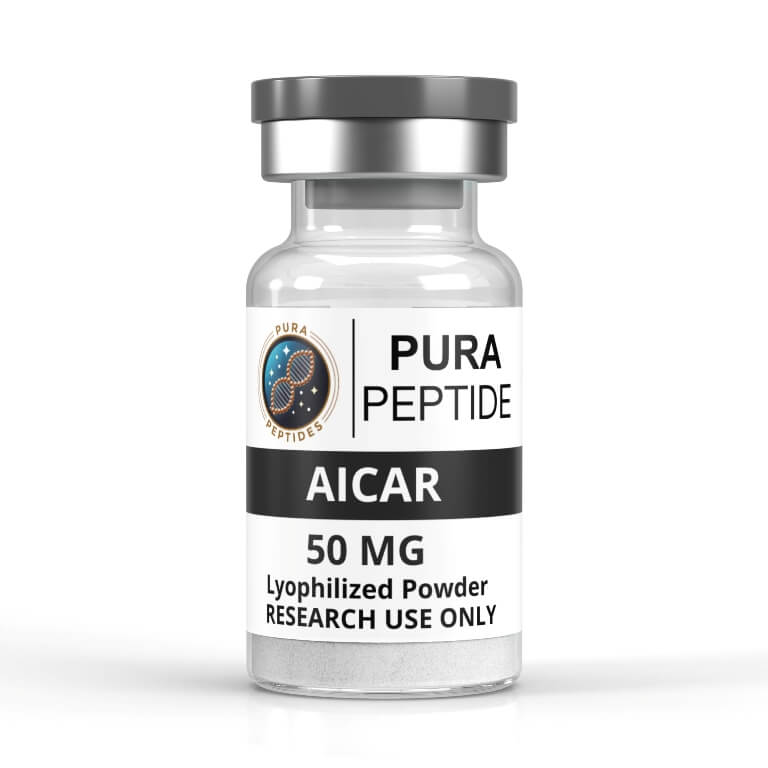
About AICAR: A Comprehensive Guide to 5-Aminoimidazole-4-Carboxamide Ribonucleotide
About AICAR
AICAR, short for 5-Aminoimidazole-4-Carboxamide Ribonucleotide, is a synthetic compound widely used in scientific and biomedical research. It is best known for its role as an AMP-activated protein kinase (AMPK) activator, a key enzyme involved in cellular energy regulation. Because of this mechanism, AICAR has become an important tool in metabolic, cardiovascular, and molecular biology research.
Originally developed for research into metabolic disorders, AICAR has gained attention in laboratories worldwide due to its ability to mimic cellular energy stress and activate pathways related to glucose uptake, fat metabolism, and mitochondrial function. Today, AICAR remains a research-use compound and is not approved as a general consumer medication.
What Is AICAR?
AICAR is a purine analog that functions inside cells by converting into AICAR monophosphate (ZMP). ZMP closely resembles adenosine monophosphate (AMP), a molecule that signals low energy levels in cells. When ZMP accumulates, it activates AMPK, triggering a cascade of cellular responses designed to restore energy balance.
In simple terms, AICAR helps researchers study how cells respond when energy levels are low. This makes it valuable for understanding diseases and conditions linked to metabolism, such as diabetes, obesity, and cardiovascular disorders.
How AICAR Works in the Body (Mechanism of Action)
The primary mechanism of AICAR revolves around AMPK activation. AMPK is often described as the body’s “energy sensor.” When activated, it helps cells switch from energy-consuming processes to energy-producing ones.
Key actions associated with AMPK activation include:
-
Increased glucose uptake by muscle cells
-
Enhanced fatty acid oxidation
-
Reduced lipid and cholesterol synthesis
-
Improved mitochondrial biogenesis
By activating AMPK, AICAR allows scientists to simulate metabolic stress in a controlled environment. This is especially useful in laboratory models studying insulin sensitivity, endurance metabolism, and cellular aging.
Research Applications of AICAR
AICAR is used strictly in research and laboratory settings, where it plays a role in several scientific fields:
Metabolic Research
AICAR is commonly used to study glucose metabolism and insulin signaling. Researchers examine how AMPK activation influences blood sugar regulation and energy expenditure at the cellular level.
Cardiovascular Studies
In cardiovascular research, AICAR is explored for its effects on cardiac metabolism. Scientists investigate how heart cells adapt to energy stress, particularly during ischemia or reduced oxygen supply.
Exercise and Muscle Physiology
AICAR has been used in experimental models to study endurance-related pathways. Researchers analyze how AMPK activation affects muscle fiber composition, mitochondrial density, and fatigue resistance.
Cellular Aging and Longevity
Because AMPK is linked to cellular maintenance and autophagy, AICAR is also studied in aging research. These studies focus on how energy regulation impacts cellular health over time.
AICAR and AMPK: Why the Connection Matters
The relationship between AICAR and AMPK is central to its scientific importance. AMPK regulates many downstream pathways, including those involved in:
-
mTOR signaling
-
Autophagy
-
Protein synthesis
-
Inflammatory responses
Understanding this connection helps researchers map how cells prioritize survival during stress. As a result, AICAR is often used as a reference compound in experiments involving metabolic regulators and signaling pathways.
Chemical Properties and Structure
From a chemical standpoint, AICAR is a nucleoside analog with properties that allow it to enter cells efficiently. Once inside, it is phosphorylated into ZMP, which then interacts with AMPK.
Key characteristics include:
-
High water solubility
-
Stability under laboratory conditions
-
Compatibility with in vitro and in vivo research models
These properties make AICAR a reliable compound for controlled experimental studies.
Regulatory and Ethical Considerations
It is important to note that AICAR is not approved for general medical use. Regulatory agencies classify it as a research compound, meaning it is intended for laboratory and experimental purposes only.
Ethical research standards require that AICAR be handled by qualified professionals and used in accordance with institutional guidelines. Any studies involving biological systems must follow proper safety, ethical, and regulatory protocols.
Common Misconceptions About AICAR
Due to online discussions and misinformation, AICAR is sometimes misunderstood. Clarifying these points is important:
-
AICAR is not a supplement
-
AICAR is not approved for athletic or performance use
-
AICAR is not a replacement for exercise or medical treatment
Scientific interest in AICAR does not equate to endorsement for non-research applications. Its value lies in controlled experimentation and data generation.
Current and Future Research Directions
Ongoing research continues to explore AMPK-related pathways, with AICAR serving as a benchmark compound. Future studies may focus on:
-
More selective AMPK activators
-
Tissue-specific metabolic regulation
-
Safer therapeutic analogs inspired by AICAR’s mechanism
While AICAR itself remains a research tool, the knowledge gained from studying it contributes to the development of new metabolic therapies.
Conclusion
AICAR (5-Aminoimidazole-4-Carboxamide Ribonucleotide) is a well-established research compound with significant importance in metabolic and cellular biology. Its ability to activate AMPK has made it invaluable for studying energy regulation, glucose metabolism, cardiovascular function, and cellular stress responses.

Reviews
There are no reviews yet.