
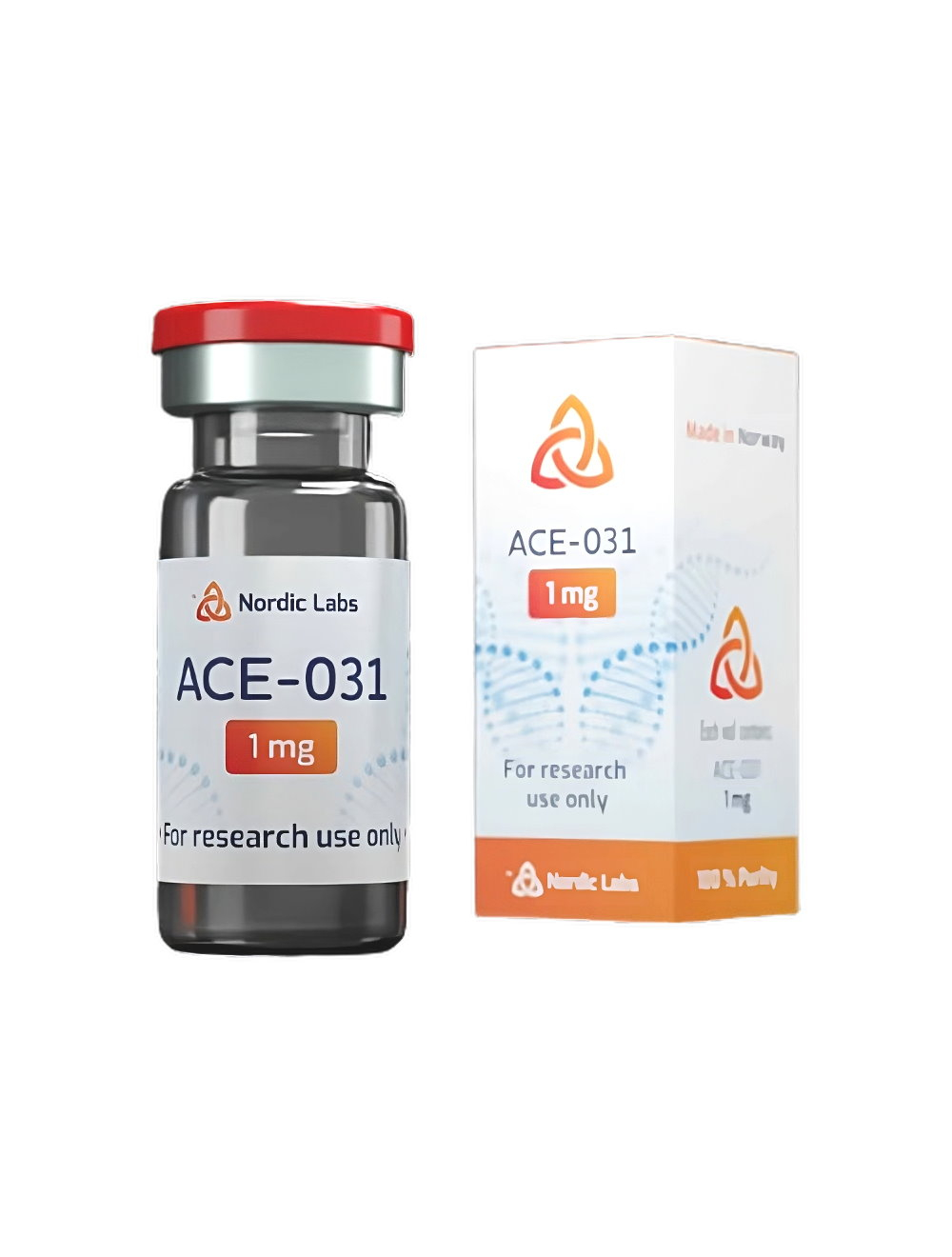
ACE-031: About, Science, and Research Overview
About ACE-031
ACE-031 is a laboratory-engineered biological compound that has drawn attention in scientific and medical research due to its relationship with muscle growth regulation. Originally developed for investigational purposes, ACE-031 is best known for its role as a myostatin pathway inhibitor, a mechanism that plays a central role in muscle development and maintenance.
Myostatin is a naturally occurring protein in the human body that limits muscle growth. By interacting with this pathway, ACE-031 became a point of interest for researchers studying conditions associated with muscle wasting, genetic muscle disorders, and other neuromuscular diseases. It is important to note that ACE-031 has been studied strictly in research and clinical investigation contexts and is not approved for general medical use.
What Is ACE-031?
ACE-031 is a recombinant fusion protein designed to bind to specific ligands involved in the myostatin signaling pathway. More specifically, it acts as a decoy receptor that interferes with proteins that normally signal the body to restrict muscle growth.
From a scientific standpoint, ACE-031 is classified as a myostatin and activin pathway modulator. These pathways are essential for regulating muscle mass, tissue development, and cellular differentiation. By limiting the signaling that inhibits muscle growth, ACE-031 allows researchers to observe how increased muscle mass might affect certain disease states.
The Science Behind ACE-031
Understanding the Myostatin Pathway
The myostatin pathway functions as a natural safeguard against excessive muscle growth. While this is beneficial for normal physiological balance, overactivity of myostatin can contribute to muscle degeneration in certain medical conditions.
ACE-031 was engineered to bind to myostatin and related ligands before they attach to their natural receptors. This binding action prevents downstream signaling, which in turn may result in increased muscle fiber size and strength—effects that sparked scientific interest during early research phases.
Research and Clinical Investigation
Early Development and Studies
ACE-031 was initially studied in controlled research environments, including preclinical and early clinical trials. Researchers explored its potential applications in conditions such as:
-
Muscular dystrophy
-
Muscle wasting disorders
-
Age-related muscle loss
-
Genetic conditions affecting muscle development
These studies primarily focused on understanding safety, biological response, and muscle tissue changes, rather than commercial or lifestyle applications.
Outcomes and Limitations
While early findings showed promise in increasing lean muscle mass, further development highlighted challenges related to safety, immune response, and long-term effects. These findings underscored the complexity of manipulating growth-regulating pathways in the human body and reinforced the need for cautious, ethical research practices.
Potential Areas of Scientific Interest
Although ACE-031 is no longer a primary focus of active clinical development, it remains relevant in academic and theoretical discussions. Researchers continue to study myostatin inhibition more broadly, using compounds like ACE-031 as reference models.
Key areas of ongoing interest include:
-
Muscle regeneration biology
-
Treatment strategies for muscle degeneration
-
Gene and protein signaling pathways
-
Advances in biologic drug design
ACE-031 contributed valuable data that continues to inform newer generations of muscle-related research compounds.
Regulatory and Ethical Considerations
ACE-031 has not received approval from major regulatory authorities for therapeutic or commercial use. Any discussion of ACE-031 should be framed strictly within research, educational, or historical contexts.
Ethical considerations are particularly important when studying compounds that affect fundamental biological growth mechanisms. Regulatory agencies emphasize patient safety, long-term impact assessment, and transparency in clinical research—principles that shaped the trajectory of ACE-031’s development.
ACE-031 in Modern Scientific Discussion
Today, ACE-031 is most often referenced in:
-
Scientific literature and journals
-
University-level biomedical research
-
Discussions on the evolution of myostatin inhibitors
-
Comparative analysis of muscle growth regulators
Its legacy lies not in widespread application, but in how it helped researchers better understand the risks and possibilities associated with targeting muscle-regulating proteins.
Common Misconceptions About ACE-031
Not a Supplement or Approved Therapy
A common misunderstanding is confusing ACE-031 with dietary supplements or approved medications. ACE-031 is neither. It is a research compound studied under controlled scientific conditions.
Not Intended for Performance Enhancement
ACE-031 was never designed or approved for athletic or performance enhancement purposes. Any such use would fall outside ethical and legal research boundaries.
Importance of Accurate Information
Because ACE-031 is often discussed online, access to accurate, well-contextualized information is essential. Misinformation can lead to unrealistic expectations or misuse. Reliable educational content should always emphasize:
-
Scientific context
-
Research-only status
-
Regulatory limitations
-
Safety and ethics
Clear communication helps ensure responsible discussion around complex biomedical topics like ACE-031.
Conclusion
ACE-031 represents an important chapter in the scientific exploration of muscle growth regulation and myostatin inhibition. While it did not progress into approved medical use, its role in advancing understanding of muscle biology remains significant.



Reviews
There are no reviews yet.